


Sociotechnical Pathways to Systemic Healthcare AI Risk
- Apr 24
- 1 min read
Our new open‑access article in Future Internet, “Healthcare AI as Critical Digital Health Infrastructure: A Public Health Preparedness Framework for Systemic Risk,” argues that some AI tools in care now function as critical infrastructure rather than stand‑alone apps. When sepsis predictors, imaging models, or documentation assistants are embedded across many hospitals, their failures can expose large patient populations.
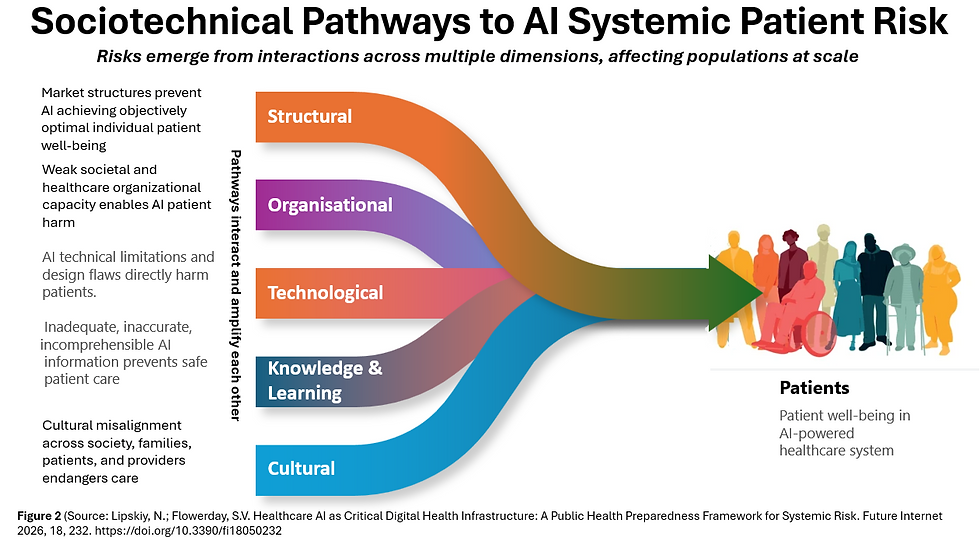
The article shows that these systemic risks emerge through sociotechnical pathways—interactions among structural, organizational, technological, epistemic, and cultural factors . Structural pathways include market concentration and procurement asymmetry; organizational pathways involve data governance, role clarity, and monitoring capacity. Technological pathways run through model architecture, integration choices, and shared vendor platforms. Epistemic pathways arise from hidden confounding and optimistic validation claims, while cultural pathways include the normalization of opaque decision support.
Figure 2 of the article, which we reproduce here, visualizes how these pathways interlock to produce systemic healthcare AI risk and why no single “fix” is sufficient.
You can read the full article here:https://www.mdpi.com/1999-5903/18/5/232
On camahealth.org, we will continue exploring how public health preparedness, surveillance, and coordinated response can make this new class of critical digital health infrastructure safer for everyone.
Comments